Ecommerce SEO lives on three battlegrounds general-purpose tools were never designed for: product-page rich results, long-tail modifier queries that third-party volume estimates miss entirely, and a product URL lifecycle where new SKUs, restocks, and discontinuations happen weekly. SEObolt is built for all three.
Content SEO optimizes for informational queries with a stable page inventory. Ecommerce SEO optimizes for commercial queries against a page inventory that changes every week: new products launch, restocks trigger schema updates, categories get restructured, and discontinued SKUs need graceful URL retirement. General SEO tools were built for the first world; they treat the second as an edge case.
The competitive surface is also different. Content sites fight for informational-query positions with a single page per topic. Ecommerce sites simultaneously fight for category-term head positions (competitive, high-value), long-tail product-modifier positions (dozens per SKU, invisible to third-party volume tools), and rich-result eligibility on every product page (schema markup, image optimization, Core Web Vitals). All three matter, and none of them can be neglected without ceding traffic to competitors that get them right.
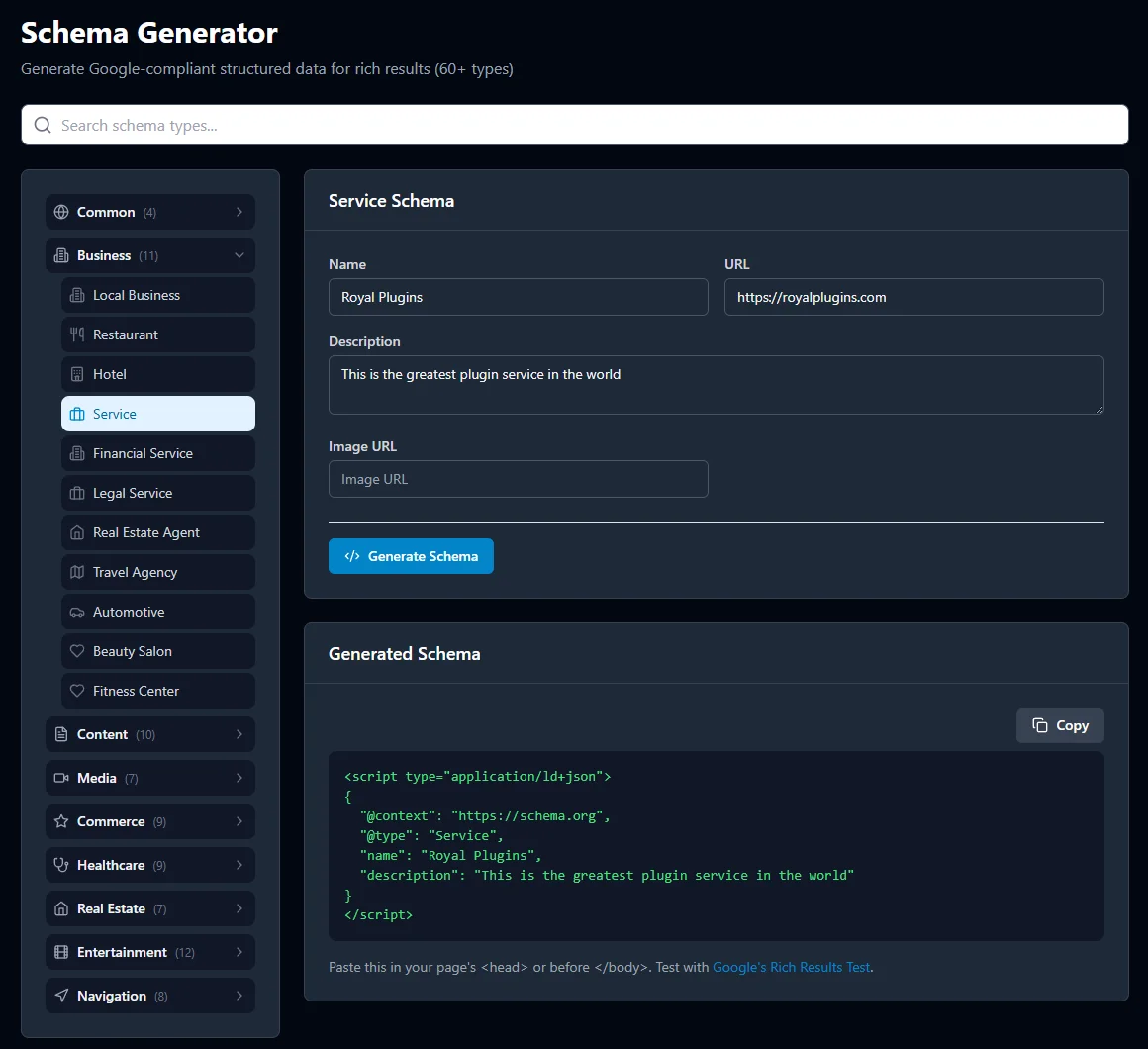
SEObolt is built for the ecommerce workflow specifically: 67 schema types with a visual builder, GSC-powered keyword research that surfaces every modifier variant, Core Web Vitals tracking with historical trends, and a redirect / 404 / instant-indexing stack that handles the product URL lifecycle without weekend work.
Every ecommerce SEO strategy comes down to three problems. SEObolt answers all three from one dashboard, at a fraction of what stacking point tools would cost.
Product pages without Product schema are invisible to Google's merchant listing rich results — the star ratings, prices, availability, and review counts that pull click-through from every SERP they appear in. Missing schema is one of the most common technical gaps on ecommerce sites, and one of the highest-leverage fixes.
How SEObolt helps: Schema Generator provides 67 JSON-LD schema types with a visual form builder and real-time validation. Product, Offer, AggregateRating, Review, and Brand schemas are all first-class. Image SEO catches product images missing ALT tags in bulk so image search traffic stops leaking.
Schema Generator →Product-modifier queries ("waterproof running shoes wide feet," "organic cotton crib sheets king-size," "gluten-free pretzels bulk") are where ecommerce conversion actually lives. Third-party keyword tools group these into head-term buckets and report near-zero volume for each variant, hiding the queries buyers actually type.
How SEObolt helps: Keyword Research pulls the modifier queries your product pages already appear for straight from Google Search Console — ungrouped, with real impressions and clicks. The Opportunities and Long-Tail modes surface the specific modifier combinations that need dedicated optimization.
Keyword Research →New products launch, restocks change availability, categories get restructured, and old SKUs get discontinued. Every URL change is either a ranking gain waiting to happen or a traffic drop waiting to happen — and doing this at ecommerce scale by hand is a weekend job.
How SEObolt helps: Instant Indexing submits new PDP URLs to Google and Bing in seconds. Redirections manages 301/302/307/410/451 redirects with regex and CSV bulk import. 404 Monitor lets you build the fixing 301 in two clicks. Content Decay flags PDPs losing traffic before they tank.
Instant Indexing →Ecommerce SEO is rarely one person's job. SEObolt supports the four roles that touch it, without forcing them into a single workflow.
Category pages typically drive a large share of ecommerce revenue, and they face heavy competition. Daily rank tracking on your category terms surfaces slippage before it becomes revenue loss, and the AI Content Optimizer scores each category page against the queries you actually appear for in Search Console so content updates target the right terms.
The queries buyers type but you do not rank for are direct inventory demand signals. Keyword Research pulls modifier queries from Search Console that surface which product attributes shoppers want — sizes, colors, materials, dietary restrictions, price points — so merchandising can align catalog decisions with real demand instead of guesses.
The Schema Generator handles Product, Offer, and Review markup with real-time validation. Page Speed tracks LCP, INP, and CLS with historical trends so you know if a recent deploy hurt Core Web Vitals. Instant Indexing pushes new PDPs live in seconds. Redirections and 404 Monitor handle the URL churn without .htaccess wrangling.
For ecommerce sites with a dedicated SEO lead (or an outside consultant), SEObolt consolidates the ecommerce SEO stack: schema generation, keyword research, rank tracking, Core Web Vitals monitoring, URL lifecycle tools, and AI search visibility — one dashboard, 26 tools. Backlink data is imported from Ahrefs, Moz, Semrush, or Search Console via CSV so you keep your existing backlink source.
Ecommerce SEO buyers typically evaluate SEObolt against two very different tools: Semrush, the general-purpose SEO platform, and Screaming Frog SEO Spider, the desktop technical crawler that is widely used for enterprise ecommerce site audits. Both are excellent at what they do, and neither is built for the specific ecommerce workflow SEObolt targets: schema generation, Core Web Vitals monitoring over time, long-tail modifier discovery from real Search Console data, and continuous product URL lifecycle management.
| Ecommerce-relevant capability | SEObolt | Semrush | Screaming Frog |
|---|---|---|---|
| Schema markup (67 JSON-LD types including Product, Offer, Review) | Generator + validator | — | Validator only (no generator) |
| Bulk Image SEO (ALT audit + bulk generation) | Audit + bulk generate | — | Audit only (missing-alt report) |
| Core Web Vitals tracking (LCP / INP / CLS with historical trends) | ✓ Continuous with historical trends | Site Audit CWV lab data | Per-crawl snapshot (via PSI API) |
| Real GSC-backed rank tracking (not scraped SERPs) | ✓ | Scraped SERPs | — (no rank tracking) |
| Long-tail modifier discovery from GSC (ungrouped queries) | ✓ (5 research modes) | Grouped estimates | Pulls GSC data into crawl (no research modes) |
| Instant Indexing (Google + Bing) built in | ✓ | — | — |
| Redirect manager + 404 monitor (with 404 → 301 in two clicks) | ✓ Manages + fixes inline | — | Reports only (export & act elsewhere) |
| Delivery model | Cloud SaaS, team access, continuous | Cloud SaaS, team access, continuous | Desktop app, per-licence, single-shot audits |
| Starting price | $29/mo (Growth — all 26 tools) | $139.95/mo (Pro) | Free up to 500 URLs / £199 per year per licence |
See the full breakdown: SEObolt vs. Semrush · also compare SEObolt vs. Ahrefs
Ecommerce SEO revolves around three surfaces content sites do not touch: product pages that need schema markup to earn rich results (price, availability, star ratings, review count), category pages that battle for competitive head terms, and product-modifier long-tail queries where third-party keyword tools consistently miss the queries buyers actually type. SEObolt is built around all three: 67 schema types including Product, GSC-powered keyword research that surfaces every modifier variant your pages appear for, and daily rank tracking that treats category pages as first-class citizens.
SEObolt's Schema Generator supports 67 JSON-LD schema types with a visual form builder and real-time validation. Product schema covers price, availability, aggregate rating, review count, brand, SKU, and every field Google requires for the merchant listing rich result. There is no coding required, and the generator validates the output against Google's structured data guidelines before you publish.
Product-modifier queries ("best waterproof running shoes for wide feet," "organic cotton crib sheets king-size," and so on) are exactly where third-party keyword tools fail. Estimated search volumes are near zero because the tools group similar queries together, but conversion rates on long-tail modifier queries are typically much higher than head terms. SEObolt's Keyword Research pulls the actual modifier queries your product pages appear for from Google Search Console, ungrouped, so you can optimize existing PDPs for the specific combinations that convert.
Product URLs churn constantly in ecommerce. SEObolt handles the whole lifecycle: Instant Indexing submits new PDP URLs to Google's Indexing API and Bing's IndexNow API in seconds so new products get crawled immediately, Redirections manages 301/302/307/410/451 redirects with regex and CSV bulk import for URL migrations, 404 Monitor tracks broken URLs in real time with referrer data and lets you create the fixing 301 in two clicks, and Content Decay flags PDPs losing traffic (seasonal or otherwise) with severity buckets so you know what to refresh.
Single-store ecommerce with one domain works well on the Growth plan at $29 per month (1 GSC property, 10 AI Visibility keywords, 100 AI credits, all 26 tools). Multi-brand or multi-region ecommerce with 2 to 5 storefronts is a fit for the Scale plan at $79 per month (5 GSC properties, 50 AI Visibility keywords, 1,000 AI credits, 3 team seats, SEObolt Pro WordPress plugin included). Enterprise ecommerce or agencies managing multiple store clients typically move to the Agency plan at $199 per month for 25 GSC properties, competitor comparison, white-label reports, and 10 team seats.
Product schema, long-tail modifier discovery, Core Web Vitals, URL lifecycle — every ecommerce SEO surface, one dashboard. Starting at $29 per month.
See Plans